

A wrap around extension is one of the most popular ways to dramatically transform a semi-detached or terraced house — and it’s easy to see why. By combining a rear extension with a side return, you can unlock a huge amount of space that was previously wasted, creating an open-plan kitchen, living or dining area that feels genuinely generous.
If you’ve been eyeing up that awkward strip of ground down the side of your house and wondering what you could do with it, this guide covers everything you need to know: what a wrap around extension actually involves, how much it costs, whether you’ll need planning permission, and how long it all takes.
What Is a Wrap Around Extension?
A wrap around extension combines two elements into one seamless project:
- A rear extension — added to the back of your home, extending into the garden
- A side return extension — filling in the narrow gap that runs alongside the rear of many semi-detached and terraced houses
Together, they create an L-shaped addition that wraps around the corner of your house. The result is a much larger ground floor footprint — often adding 20–40 square metres depending on your property — without losing any of your garden to a square-on extension.
Most homeowners use the extra space to create a large open-plan kitchen and dining area, but it works brilliantly as a family room, snug, or utility zone too.
How Much Does a Wrap Around Extension Cost?
Costs vary depending on the size of the extension, the specification, and where you are in the country — but as a rough guide:
- Build cost: £2,000–£3,500+ per square metre (structural shell)
- Typical total project cost: £60,000–£120,000+
- Smaller, simpler wrap arounds: £45,000–£70,000
- High-spec finishes, rooflights, bifold doors: £90,000–£130,000+
Because a wrap around involves more complex junction details — particularly where the rear meets the side return — build costs per square metre are typically a little higher than a simple rear extension. The structural complexity, additional steelwork, and roofing details all add to the bill.
You’ll also need to budget for professional fees (drawings, planning application, building regulations approval), which typically add £3,000–£8,000 depending on the company you use and how much is handled for you.
Do You Need Planning Permission for a Wrap Around Extension?
This is where a lot of homeowners are surprised — and not always in a good way.
The rear extension part of a wrap around often falls within permitted development (PD) rights, meaning you can build it without a full planning application. But the side return element usually does require planning permission, because side extensions aren’t covered by PD rights in most cases.
That means most wrap around extensions will need a planning application — and you’ll need properly drawn plans to submit one. The good news is that wrap arounds are generally well-received by councils, as long as the design is sympathetic to the existing house and neighbouring properties.
Key planning considerations include:
- Design and materials — councils typically want the extension to match or complement the original house
- Impact on neighbours — particularly windows and the 45-degree daylight rule
- Conservation areas — stricter rules apply; always check before you start
- Listed buildings — you’ll need listed building consent on top of planning permission
If you want the full picture on planning permission for extensions, our house extension drawings service includes a thorough feasibility assessment before we put pencil to paper.
Will You Need Building Regulations Approval?
Yes — every wrap around extension will need building regulations approval, regardless of whether it requires planning permission. Building regs cover the structural and safety aspects of the build: foundations, structural steelwork, insulation, drainage, electrics, and so on.
You have two routes:
- Full plans application — submitted before work starts, approved in advance. Gives your builder a clear set of approved drawings to work from.
- Building notice — simpler and faster to submit, but inspections happen during the build. Less upfront certainty but works fine for many projects.
A wrap around extension typically benefits from a full plans approach, given the structural complexity involved — particularly if there’s significant steelwork or drainage modifications.
How Long Does a Wrap Around Extension Take?
Here’s a realistic timeline from decision to done:
- Drawings and design: 3–6 weeks
- Planning application decision: 8 weeks (most councils aim for this)
- Building regulations approval: 4–6 weeks (if full plans route)
- Finding a builder and getting quotes: 2–6 weeks
- Build time on site: 10–20 weeks depending on size and complexity
In total, you’re typically looking at 6–12 months from starting the design process to getting the keys to your new space. That sounds like a long time, but the planning and approvals phases happen in the background — you’re not waiting around doing nothing.
Design Tips for a Great Wrap Around Extension
A wrap around extension gives you a lot of scope to do something genuinely special. Here are a few design ideas worth considering:
Maximise Natural Light
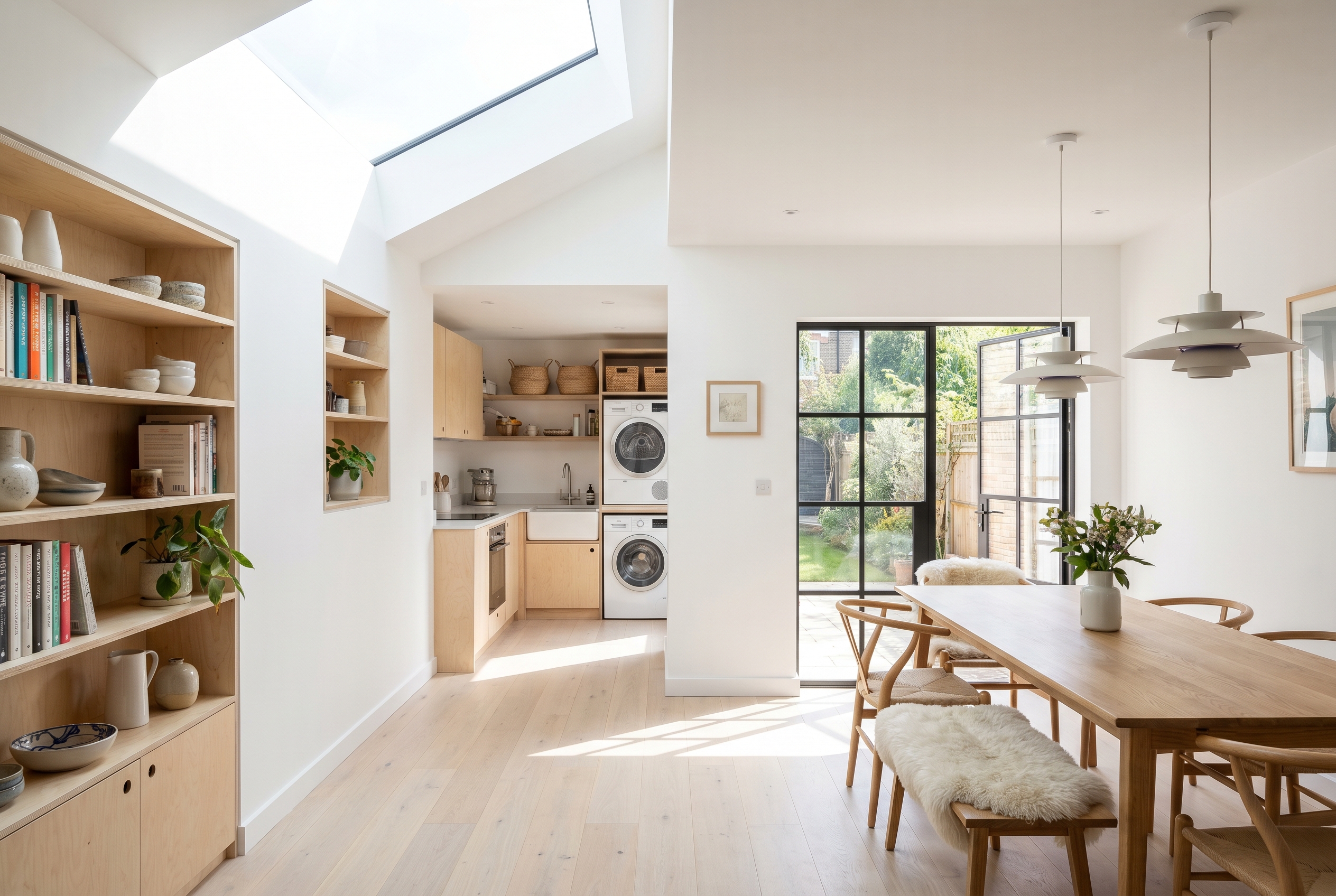
The side return section can feel enclosed without thought — it’s sandwiched between your house and the boundary wall. The solution? Rooflights. A row of rooflights along the side return floods the space with overhead natural light that no window could achieve. They’re one of the best investments you can make in a wrap around.
Open Plan or Broken Plan?
Full open plan kitchen-diner-living rooms are still popular, but a lot of homeowners are now opting for broken plan layouts — keeping a visual connection between spaces while using half-height walls, joinery, or changes in floor level to create some definition. It tends to feel more liveable day-to-day, especially with kids.
Bifold or Sliding Doors?
Both work beautifully in a wrap around. Bifolds fold right back to create a huge opening, while sliders have fewer frame sections and arguably look more contemporary. If budget is tight, a single large set of French doors with side glazing achieves a similar feel for less.
Think About the Structural Steel Early
Removing the back corner of your house to create an open plan space requires a steel frame to carry the load. This is standard in wrap arounds and nothing to worry about — but it needs to be designed by a structural engineer and allowed for in your budget. Make sure your drawings include structural calculations before you go to tender with builders.
What Makes a Wrap Around Different to a Simple Rear Extension?
If you’re comparing the two, here’s the honest summary:
- More space — the side return adds meaningful square footage that a rear-only extension doesn’t
- Better natural light — rooflights in the side section make the whole ground floor feel brighter
- Almost certainly needs planning permission — rear-only extensions can sometimes go PD; wrap arounds rarely can
- Higher cost — more structural complexity, more roofing, more glazing
- Greater transformation — when done well, a wrap around changes how a house feels completely
For many semi-detached homeowners, it’s the single best-value home improvement project available — particularly if the side return is already a dead zone used for bins and bikes.
Getting the Right Drawings for a Wrap Around Extension
Whether you’re going for planning permission or building regulations approval (or both), you’ll need professional drawings. Most companies charge separately for planning drawings and building regs drawings — and some charge by the hour, so the final bill can be unpredictable.
At Arkiplan, we handle both under one fixed price. You get planning drawings, building regulations drawings, structural calculations, and all submissions handled for you — with no hidden extras. We also use LiDAR 3D scanning to survey your home remotely, so there’s no need to take half a day off for a surveyor visit.
Take a look at our house extension drawings packages to see how it works and what’s included.
Ready to Start Planning Your Wrap Around Extension?
A wrap around extension is a significant investment — but for the right property, it’s one of the most rewarding things you can do. More space, better light, a complete transformation of your ground floor. Done well, it changes how you live in your home every single day.
Get an instant online quote and see exactly what’s included — fixed price, no surprises.