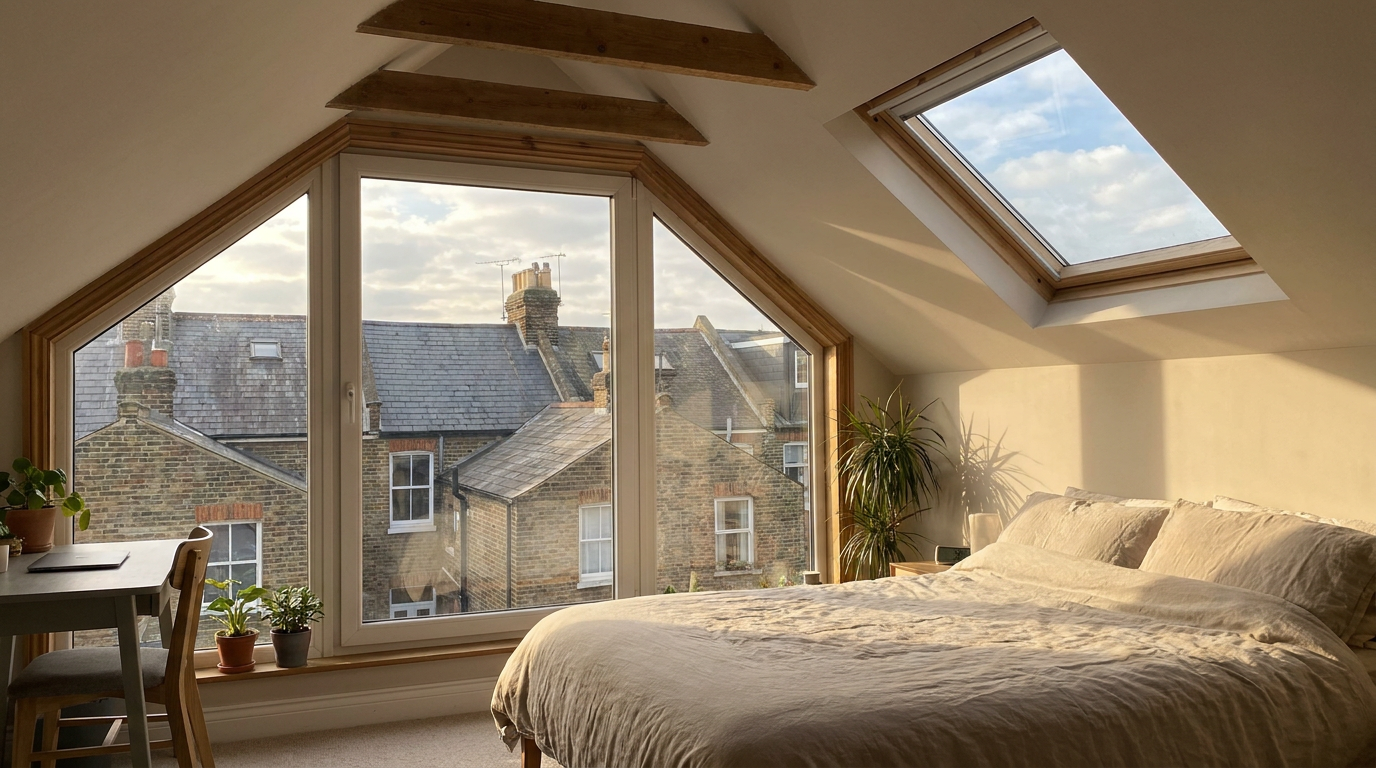
Loft conversion drawings
Fixed-price drawings for dormer, hip-to-gable, Mansard and L-shaped loft conversions. Often the highest-value-per-pound project a UK home can take — and most lofts can fit one. We handle the head-height check, the staircase routing, and the planning paperwork.
Every type of loft conversion
Which one suits your house depends on its roof shape, your borough's planning rules, and how much head-height you've got. We'll tell you what your loft can take on the free design call. As a starting point:
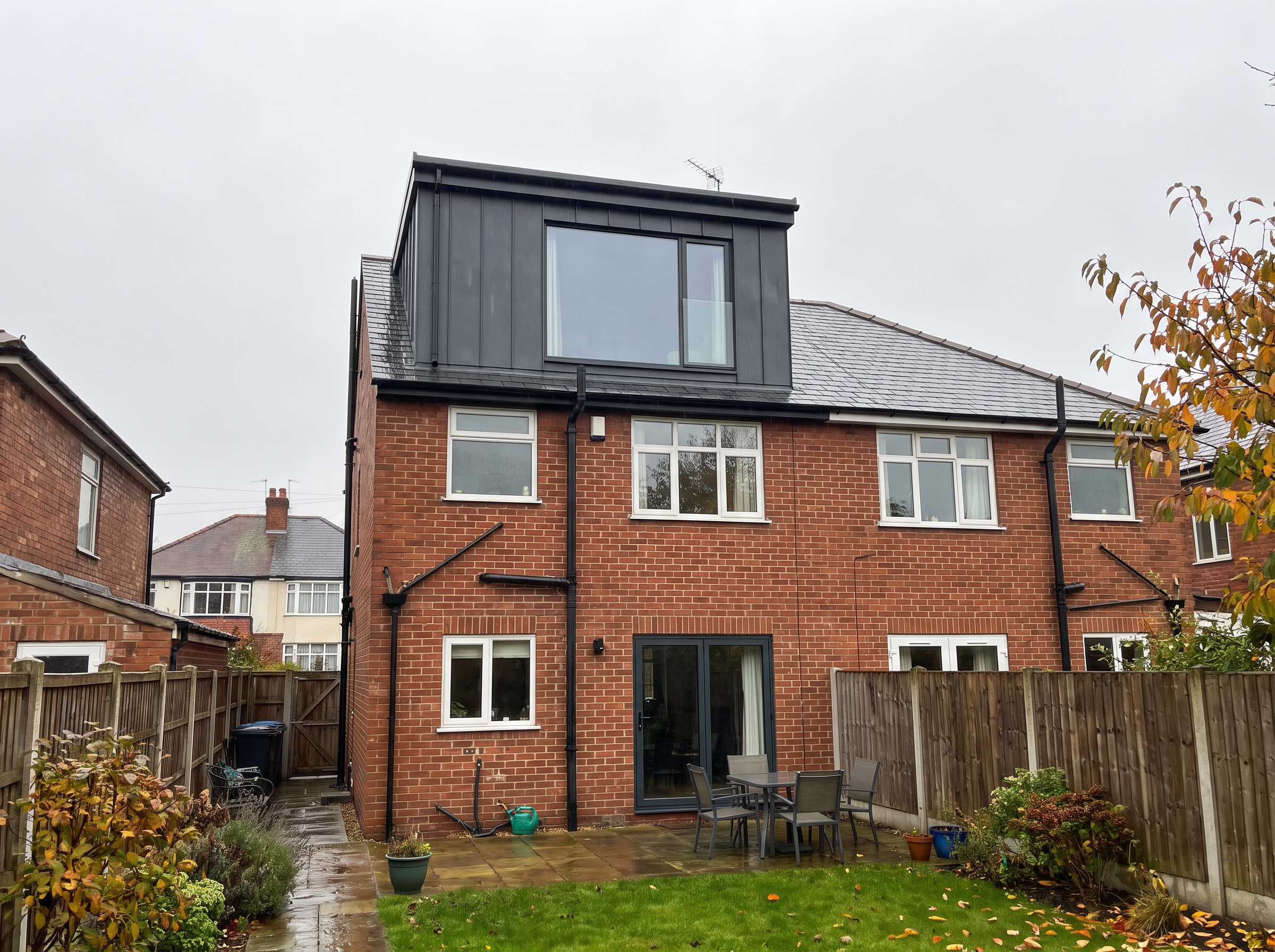
A box-shaped extension projecting from the rear roof slope to add full head-height and floor area. The most common type, and frequently allowed under permitted development without full planning. Works on terraces, semis and detached.
Replaces the angled hip side of your roof with a vertical gable wall, dramatically increasing the usable loft volume. Usually combined with a rear dormer for maximum space. Needs planning unless your house already has a gable end.
Reshapes the entire roof into a near-vertical Mansard profile, adding a full extra storey of liveable space. The most space-efficient type. Always needs planning permission — common in conservation areas where pitched-roof rules apply.
A dormer extended around the rear addition (the "outrigger") of a Victorian or Edwardian terrace, forming an L-shape on plan. Brilliant for adding two bedrooms and a bathroom in a single project. Planning permission usually required.
What's included
Loft conversions sit under Building Regulations Part B (fire safety) — which means more drawings, more calculations, and more inspector liaison than a typical extension. All of it is included in your Arkiplan package.
See all packages →Planning permission for loft conversions
Most simple rear dormers qualify under permitted development — meaning no planning application required, just a Lawful Development Certificate to confirm it. But the rules are strict on volume (40m³ on a terrace, 50m³ on detached), positioning relative to the front roof slope, and material match.
Hip-to-gable conversions, Mansards, anything in a conservation area, anything on a listed building, or any dormer that exceeds the volume limits — all need full planning permission. We handle the design-and-access statement, neighbour consultation prep, and any conservation-officer pre-app required.
Loft conversions trigger Part B fire-safety rules. That means a 30-minute fire-resistant escape route from the new floor to the front door, fire doors on every habitable room off the new staircase, and either an openable escape window (less than 4.5m floor-to-window) or a protected staircase. We design all of this into the layout from day one — not as a council afterthought.
Yes — every loft conversion needs structural calculations for the new floor joists, the steel ridge beam (or pair of steels), and any opened-up wall below for the new staircase. Calculations are included in our Standard and Premium packages. If you only need them as an add-on, we can quote for that too.
For a deeper read, see our blog: Do I Need a Structural Engineer for a Loft Conversion? and Everything Homeowners Need to Know About Dormer Loft Conversions.
No call required. No card required. Just a tight price range tailored to your loft's complexity.