

So you’ve decided to extend your home. Brilliant. But what actually happens between that first conversation with a design company and the moment you’re sitting in your brand-new kitchen-diner with a cup of tea? The gap between “I want an extension” and “it’s built” can feel like a black hole — full of jargon, waiting, and the occasional headache.
This guide walks you through the full house extension timeline — every stage, what to expect, how long it takes, and what can slow things down. We’ll give you realistic timescales rather than the optimistic estimates you might find elsewhere.
Stage 1: Design and Drawings (Weeks 1–4)
The first step is getting your ideas down on paper — properly. This means working with an experienced design company to produce architectural drawings that reflect what you want, what’s feasible, and what’s likely to get approved.
At Arkiplan, we start with a 3D LiDAR scan of your property — this takes around 20 minutes and gives us an accurate model of your home to design from. No measuring tapes, no errors, no wasted time.
From there, you’ll have a video design meeting where we go through your brief, look at ideas, and agree on a scheme. Within a few weeks, you’ll have full architectural drawings ready to submit.
Typical timeframe: 3–6 weeks (some companies take much longer — often 3+ months)
Stage 2: Planning Permission (Weeks 5–21)
Unless your extension falls under permitted development (more on that below), you’ll need planning permission from your local council. This is often the longest single stage of the whole house extension timeline.
Here’s how planning permission typically works:
- Your design company submits the application on your behalf
- The council validates the application (usually within 1–2 weeks)
- A statutory 8-week determination period begins
- Neighbours are consulted and can submit comments
- A planning officer assesses the application
- A decision is issued
In practice, many councils take 10–12 weeks rather than 8. And if there are complications — objections, officer queries, or a need for additional information — it can stretch to 16 weeks or more.
What can speed it up? Good-quality drawings, a well-prepared planning statement, and a design that fits the local character. Experienced teams know what works in different areas.
What can slow it down? Objections from neighbours, a planning officer with a heavy caseload, listed buildings, conservation areas, or an unusual site.
Typical timeframe: 8–16 weeks from submission to decision
What if I don’t need planning permission?
Many single-storey rear extensions and loft conversions qualify as permitted development — meaning you can build without a planning application. If this applies to you, this stage drops out of the timeline entirely and you can move straight to building regulations.
Worth checking with your design company whether your project qualifies, or whether a Lawful Development Certificate is worth getting for peace of mind.
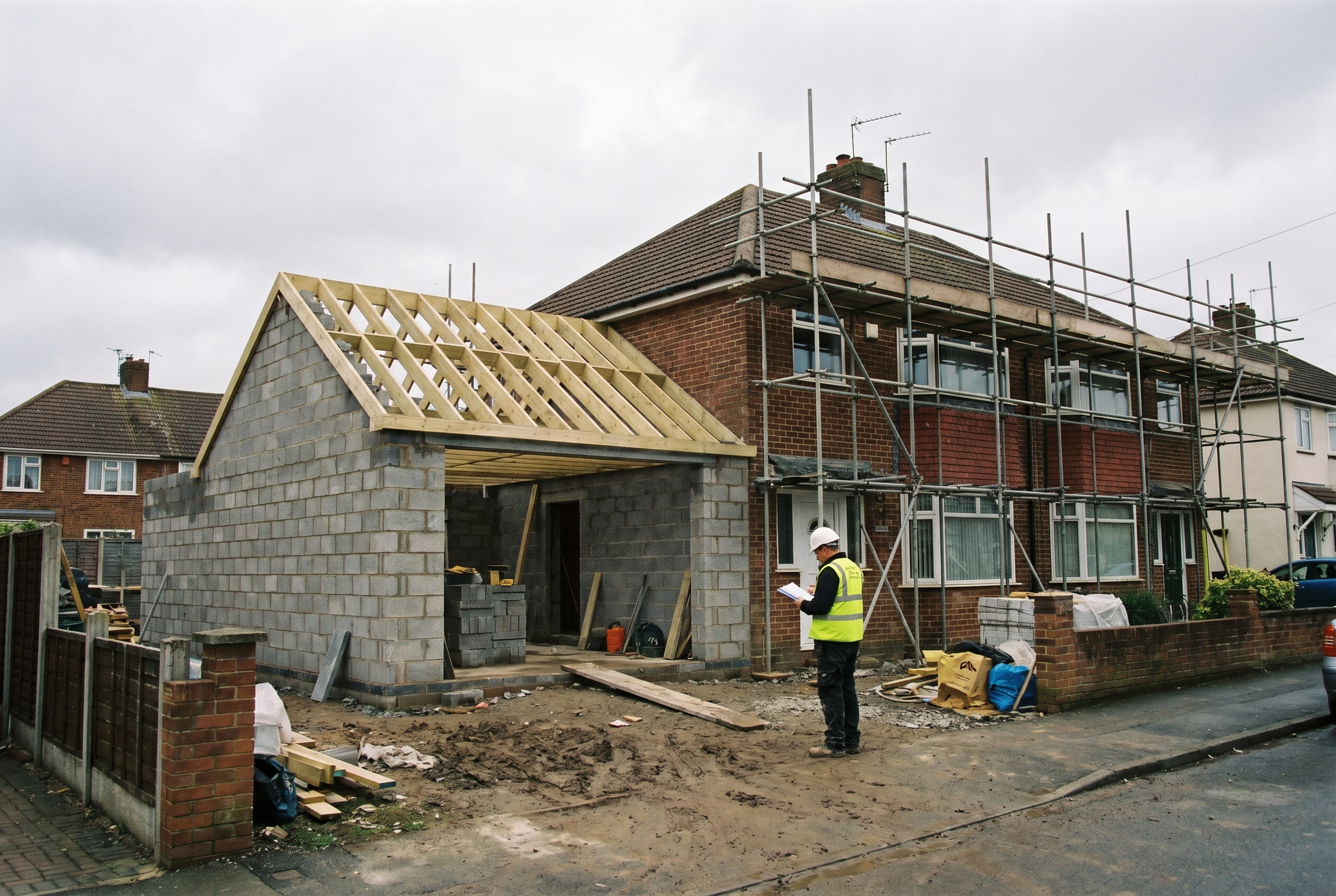
Stage 3: Building Regulations Approval (Weeks 4–12)
Building regulations are separate from planning permission and run in parallel. Where planning is about whether you can build, building regs are about how you build — structural integrity, fire safety, insulation, drainage, and so on.
You have two routes:
- Full Plans application — detailed structural drawings and specifications are submitted and approved before work starts. More work upfront, but fewer surprises on site.
- Building Notice — simpler, less paperwork, inspections happen during the build. Riskier if something doesn’t comply.
At Arkiplan, we handle the building regulations submission as part of our service. Our structural engineer calculations and technical drawings go in at the same time as the planning application where possible — so you’re not waiting around.
Typical timeframe: 5–8 weeks for Full Plans approval; ongoing inspections throughout the build
Stage 4: Finding a Builder (Weeks 2–8, overlapping)
Most people underestimate how long it takes to find a decent builder. You can’t just Google “builders near me” and pick the first result — you need quotes, references, availability, and someone you actually trust.
Good builders are busy. Don’t be surprised if you’re told the earliest start date is 3–4 months away.
Arkiplan’s Trusted Builder Network can help connect you with vetted local builders who are familiar with our drawings format and know what Arkiplan clients expect. It’s not a guarantee, but it’s a decent shortcut.
Tips for finding a builder:
- Get at least 3 quotes from your drawings — not before
- Ask for references from similar recent projects
- Check they have public liability insurance
- Agree a contract in writing — never a handshake deal
- Avoid anyone who asks for large upfront cash payments
Typical timeframe: 4–8 weeks to get quotes; builder availability may add a further 8–16 weeks before they can start
Stage 5: Pre-Build Preparation (Weeks 1–4 before start)
Once you’ve chosen your builder and they have a start date, there’s a bit of prep work before the first spade goes in:
- Party wall agreements — if you share a wall with a neighbour, you may need a Party Wall Act agreement. Surveyors need to be appointed and notices served. Allow 2–3 months if you haven’t started this process.
- Structural engineer visit — your builder may want an engineer to look at the site before starting, especially for beam sizing or foundation depths.
- Materials ordering — some materials (bi-fold doors, steels, windows) have long lead times. Your builder should order these early.
- Building control notification — you must notify your local authority before work starts so inspectors can schedule visits.
Stage 6: The Build (Weeks 1–16+)
Finally — actual construction. How long this takes depends entirely on the size and complexity of your extension, but here’s a rough breakdown for a typical single-storey rear extension:
- Groundworks and foundations: 1–3 weeks. Digging out, laying the concrete base, drains.
- Blockwork walls: 2–3 weeks. Walls go up, cavity insulation goes in.
- Roof structure and covering: 1–2 weeks.
- First fix (electrics, plumbing): 1–2 weeks. Cables and pipes before plasterboard goes up.
- Plastering: 1 week, plus 1–2 weeks drying time.
- Second fix (sockets, radiators, fittings): 1–2 weeks.
- Flooring and decorating: 1–2 weeks.
- Snagging and handover: A few days to a week.
For a double-storey extension or a more complex loft conversion, double those timescales at minimum.
Typical build time: 10–18 weeks for a single-storey extension; 20–30 weeks for a double-storey
Stage 7: Completion and Sign-Off
When the build is done, your local authority building inspector will carry out a final inspection. If everything complies with the approved drawings and building regulations, they’ll issue a Completion Certificate. Keep this safe — you’ll need it when you come to sell your home.
Your solicitor will ask for it. Your buyer’s solicitor will ask for it. If you can’t produce it, it can cause serious delays at the point of sale — sometimes years later.
Full House Extension Timeline: The Summary
| Stage | Typical Duration |
|---|---|
| Design and drawings | 3–6 weeks |
| Planning permission | 8–16 weeks |
| Building regulations | 5–8 weeks (overlapping) |
| Finding a builder | 4–8 weeks + wait time |
| Pre-build preparation | 2–4 weeks |
| The build | 10–18 weeks (single-storey) |
| Completion sign-off | 1–2 weeks |
Total realistic timeline: 9–14 months from first enquiry to completion
Yes, really. Most homeowners are surprised by this. Other companies may tell you “6 months” to get your business — but if everything goes smoothly and your builder starts promptly, under a year is genuinely fast.
What Can Go Wrong (and How to Manage It)
Extensions rarely go completely to plan. Common delays include:
- Planning refusal — adds weeks or months if you need to appeal or amend and resubmit
- Bad weather — groundworks and external work stop in heavy frost or prolonged rain
- Materials delays — windows, doors, and steels can take 8–12 weeks. Order early.
- Unexpected ground conditions — if foundations need to go deeper than planned, costs and time go up
- Builder problems — illness, other jobs overrunning, or simply unreliable tradespeople
The best thing you can do is start early, choose your builder carefully, and keep communication open throughout. A good project manager (whether that’s your design company, a PM, or you) makes an enormous difference.
Ready to Get Started?
The sooner you start the design process, the sooner you’ll be in your finished extension. Arkiplan handles the architectural drawings, planning application, building regulations, and structural calculations — all in-house, fixed price, with a planning permission guarantee.
Get your instant quote below and we’ll have your drawings underway within weeks — not months.