

If you’re planning a house extension or loft conversion, you’ll come across two routes when it comes to building regulations approval: a building notice and a full plans application. They both get you to the same destination, but the journey — and the risk — is very different.
This guide breaks down exactly what each route means, which one suits different projects, and what you need to know before you start work.
What Are Building Regulations?
Before we get into the building notice vs full plans debate, it’s worth understanding why building regulations exist at all.
Planning permission is about whether you’re allowed to build something. Building regulations are about how it’s built. They cover structural integrity, fire safety, insulation, drainage, ventilation, electrical safety, and accessibility — essentially everything that ensures your extension is safe to live in.
Almost all extensions and loft conversions require building regulations approval, regardless of whether they need planning permission. The two are completely separate processes.
What Is a Building Notice?
A building notice is the faster, simpler route. You submit a short form to your local building control department, pay a fee, and — assuming there are no objections — you can start work within two days.
There are no detailed drawings submitted upfront. Instead, a building control officer inspects the work at key stages as it progresses: foundations, damp-proof course, drainage, structural elements, insulation, and completion.
The inspections are designed to catch problems as they occur. If something isn’t right, you’ll be asked to put it right before moving on.
When does a building notice work well?
- Straightforward single-storey extensions
- Projects where you have an experienced, trusted builder
- Works that don’t involve complex structural changes
- Situations where you want to get started quickly
When does a building notice fall short?
- The work is on or near a boundary — a building notice cannot be used where the work falls under the Party Wall Act
- Your project involves a commercial element or a building used as a workplace
- You need a mortgage lender to confirm building regulations compliance (lenders often want the full plans route)
- Your builder is less experienced and benefits from having agreed drawings to work to
One important thing to understand: if the building control officer spots a problem late in the build — say, the wrong insulation in the roof — you may need to open walls or redo work that’s already been done. That’s the risk with a building notice. There’s no pre-approval of the design.
What Is a Full Plans Application?
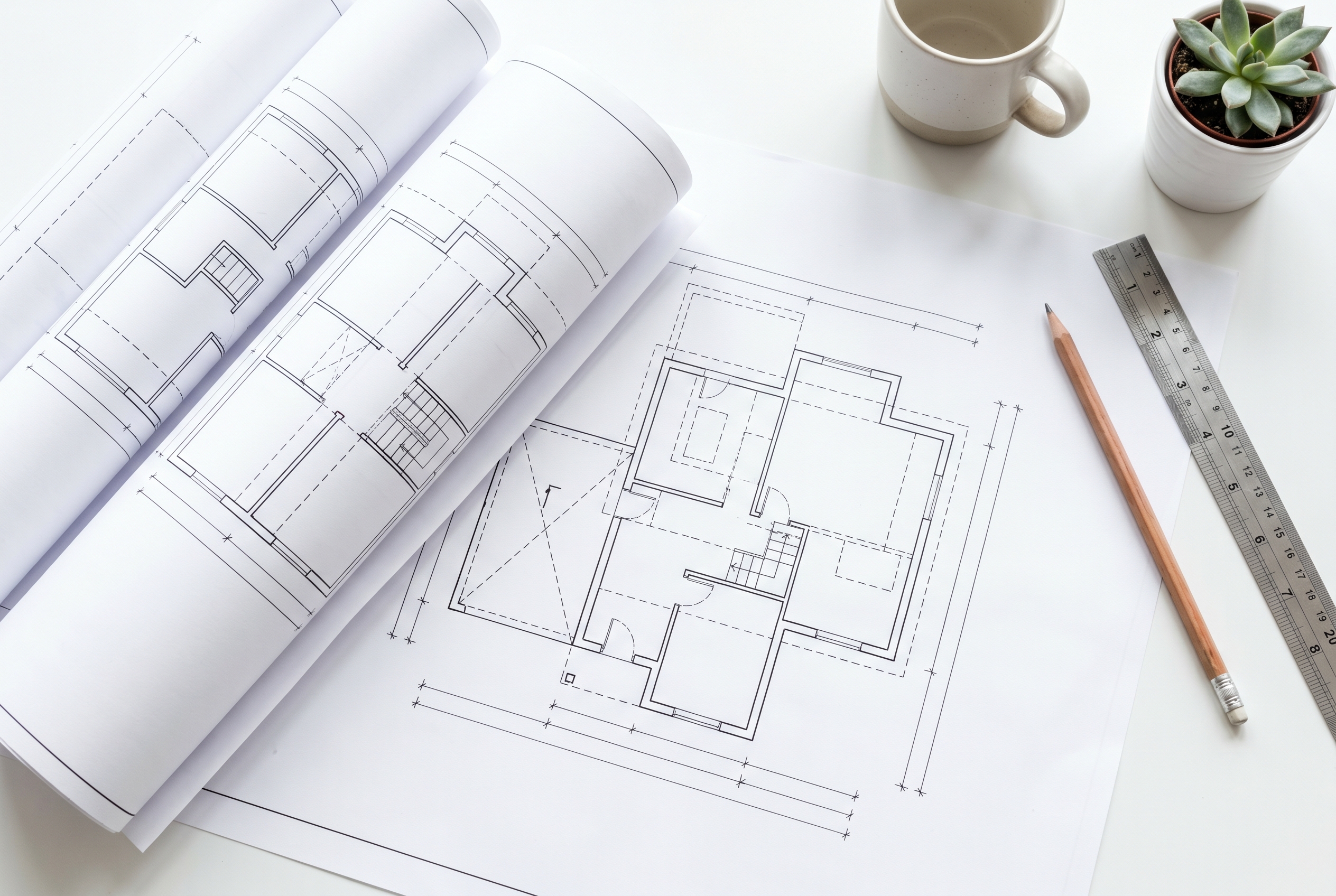
A full plans application (sometimes called “full plans approval”) is the more comprehensive route. You submit detailed drawings and specifications to building control before work starts. A surveyor reviews them, may ask for amendments, and issues a formal approval notice — usually within five weeks (or two months if the council has extended the period).
Once approved, your builder has a clear, agreed set of drawings to work from. The building control officer still visits at key stages, but they’re checking that the work matches the approved plans rather than making judgement calls on the day.
The benefits of full plans
- Less risk: Problems are spotted before work starts, not halfway through it
- Clearer for builders: Everyone knows exactly what’s been approved, which means fewer disputes and fewer unexpected costs
- Better for lenders: Mortgage lenders and solicitors often prefer a full plans completion certificate when a property is sold or remortgaged
- Formal written approval: You get a decision notice in writing, which is useful if there’s ever a dispute about the build
The downsides
- Takes longer upfront: You can’t start work until the plans are approved, which adds weeks to the start date
- Costs more upfront: You need detailed drawings produced before submission, which means engaging a designer or architectural service before your builder is even appointed
For most extensions — particularly anything over a single storey, anything involving structural steel, or anything with a tight budget where surprises would be costly — full plans is generally the smarter choice.
Building Notice vs Full Plans: A Quick Comparison
Here’s a side-by-side breakdown of the key differences:
- Upfront submission: Building notice — short form only. Full plans — detailed drawings and spec.
- Approval before work: Building notice — no formal approval. Full plans — yes, written approval issued.
- Time to start: Building notice — 2 days. Full plans — 5 weeks or more.
- Risk of late-stage changes: Building notice — higher. Full plans — lower.
- Best for: Building notice — simple projects with experienced builders. Full plans — most extensions, loft conversions, complex work.
- Accepted by mortgage lenders: Both produce a completion certificate — but lenders may query a building notice route.
What Drawings Do You Need?
For a building notice, you don’t need to submit drawings. You’ll still want them — your builder needs to know what they’re building — but they don’t go to building control in advance.
For a full plans application, you’ll typically need:
- Location plan (usually 1:1250 scale)
- Site plan showing the extent of the works
- Floor plans of existing and proposed layouts
- Elevations showing the external appearance
- Sections showing construction details — floor build-up, roof structure, insulation values
- Structural calculations (if steelwork or significant structural changes are involved)
This is why full plans takes longer and costs more upfront — it requires a proper set of technical drawings, not just the basic planning drawings you may already have.
At Arkiplan, our house extension drawings service includes everything you need for both planning permission and building regulations — one fixed price, all handled in-house.
Can You Use a Private Building Control Inspector?
Yes. Alongside your local council’s building control service, you can use an Approved Inspector — now called a Registered Building Inspector (RBI) following changes to the Building Safety Act 2022. Private building control companies operate across England and Wales and often offer faster turnaround times and a more personal service.
The process is slightly different. Instead of submitting a building notice or full plans application to the council, you give an Initial Notice jointly with the inspector to the council, which effectively transfers responsibility. The inspector then oversees the work in the same way building control would.
Costs vary, but private inspectors are often competitive with council fees — and for larger or more complex projects, the speed and consistency of service can be worth it.
What Happens at the End?
Once all inspections are passed and building control is satisfied the work complies, you’ll receive a completion certificate. This is important — keep it safe.
When you sell your home, your solicitor will ask for evidence of building regulations compliance. A completion certificate is what proves it. Without one, you may be asked to get retrospective approval — or indemnity insurance — which adds cost and delay to a sale.
If you used the building notice route and work wasn’t signed off properly at each stage, getting a completion certificate retrospectively can be difficult. Another reason many people opt for the full plans route.
Which Route Is Right for Your Project?
Here’s a simple rule of thumb:
- Small, simple extension, experienced builder, no lender involved: Building notice is probably fine.
- Anything over one storey, involves structural steel, has a mortgage lender, or is on or near a boundary: Full plans is the safer, smarter choice.
- Loft conversion: Full plans almost always — the structural and thermal complexity makes upfront approval much lower risk.
If in doubt, go full plans. The extra time upfront is almost always worth it for the peace of mind — and the protection — it gives you.
Our team handles building regulations drawings and submissions as standard. Whether you’re extending your kitchen, adding a rear extension, or converting your loft, take a look at our house extension drawings or loft conversion drawings services to see what’s included.
Get Started With Your Extension Drawings
Ready to get your project moving? At Arkiplan, we handle your planning and building regulations drawings from start to finish — fixed price, fast turnaround, no hidden fees.