

One of the most common questions we get at Arkiplan is: how long does a house extension take? And honestly, it’s a fair one. You’re about to spend a significant amount of money, live with builders in your home, and come out the other side with a new space — you want to know what you’re signing up for.
The honest answer? It depends. But “it depends” isn’t very helpful, so let’s break it down properly. Here’s a realistic, UK-focused guide to house extension timelines — from first sketches to the day you move the furniture in.
The Short Answer: Typical House Extension Timelines
Before we get into the detail, here’s a rough overview of what most UK homeowners experience:
- Small single-storey extension (up to 3m): 4–7 months total
- Larger single-storey or side return: 6–9 months total
- Double-storey extension: 9–14 months total
- Wraparound or complex extensions: 12–18 months total
These timelines cover everything: design, planning (if needed), building regs, finding a builder, and the build itself. The build is often the quickest part. It’s everything before and after that catches people out.
Stage 1: Design and Planning Drawings (4–8 Weeks)
Every extension starts with drawings. You’ll need an architectural designer (like us at Arkiplan) to produce a set of plans that show exactly what you want to build.
At Arkiplan, we use LiDAR 3D scanning to survey your home remotely and produce detailed drawings in 2–4 weeks. Traditional architects can take 8–12 weeks just for this stage. We hold design meetings over Zoom, so there’s no waiting around for site visits.
The drawings stage includes:
- Survey of your property
- Initial design concepts
- Revisions based on your feedback
- Final drawings ready for planning or permitted development
If you’re keen to get started, find out more about our house extension drawing service here.
Stage 2: Planning Permission (8–10 Weeks, If Required)
Not all extensions need planning permission. Many fall under permitted development rights, which means you can build without applying — as long as your extension meets certain size and design criteria.
If your extension does need full planning permission, here’s what to expect:
- Submission to decision: 8 weeks in most cases (can be 13 weeks for major applications)
- Neighbour consultation period: Built into the 8 weeks
- Potential conditions: The council may approve with conditions (e.g. specific materials)
Some councils are slower than others — particularly in conservation areas or where there’s local objection. Factor in some buffer time here.
At Arkiplan, we handle the full planning application for you. We’ve submitted thousands across England and Wales and offer a planning permission guarantee — if your application is refused, we refund the planning fee (approximately £700).
Stage 3: Building Regulations Approval (4–8 Weeks)
Even if your extension doesn’t need planning permission, it will almost certainly need building regulations approval. This is a separate process that makes sure your extension is structurally sound, thermally efficient, and safe.
There are two routes:
- Full plans application: Submit detailed drawings before work starts. Approval usually takes 5–8 weeks but gives you certainty before the builder starts.
- Building notice: No drawings submitted upfront — the building control officer inspects as work progresses. Faster to start but riskier if things need changing mid-build.
Most builders prefer the full plans route because it means fewer surprises. We recommend it too.
Building regs approval can run in parallel with planning, which is how you save time. While waiting for the planning decision, your designer can be working on the technical drawings needed for building control.
Stage 4: Finding a Builder and Getting Quotes (4–8 Weeks)
This is the stage most homeowners underestimate. Good builders are busy. Really busy. The process looks something like this:
- Contact 3–5 builders for quotes
- Wait for site visits and quotes to come back (2–4 weeks)
- Compare quotes, check references, confirm availability
- Sign contracts and agree a start date
Even once you’ve chosen your builder, their earliest availability might be 4–8 weeks out. Factor this into your timeline — don’t assume you can get started the week after planning comes through.
Arkiplan clients get access to our Trusted Builder Network — a vetted group of extension specialists across England and Wales. This cuts weeks off the builder-finding process because we’ve already done the vetting work for you.
Stage 5: The Build Itself
Finally — the bit that actually changes your house. Here’s how long the build typically takes depending on extension type:
Single-Storey Rear Extension
- Small (3–4m): 8–12 weeks
- Medium (4–6m): 12–16 weeks
- Large or open plan: 14–20 weeks
Double-Storey Extension
- 20–28 weeks on average
- Longer if complex roof structure or significant structural work
Side Return Extension
- 12–20 weeks depending on size
- Usually involves a steel structure over the existing side passage
The build will progress through foundations, structure, waterproofing, roof, windows, plastering, first fix (electrics/plumbing), second fix, and finishing. It’s a lot of stages — each one dependent on the previous.
What Causes Delays? (And How to Avoid Them)
Even well-planned extensions hit delays. Here are the most common culprits:
- Planning delays: Councils can request additional information, which pauses the clock. Make sure your drawings are thorough from the start.
- Structural surprises: Old houses hide all sorts — unexpected foundations, buried drains, structural issues. Always get a proper structural engineer involved early.
- Material lead times: Bespoke windows, bifold doors, and certain cladding can take 8–12 weeks to arrive. Order early.
- Builder delays: Weather, staff issues, other jobs running over. Build in a 2–4 week buffer around your target completion.
- Change of mind mid-build: Changing materials or layout mid-project is the biggest cause of overruns. Lock in your choices before work starts.
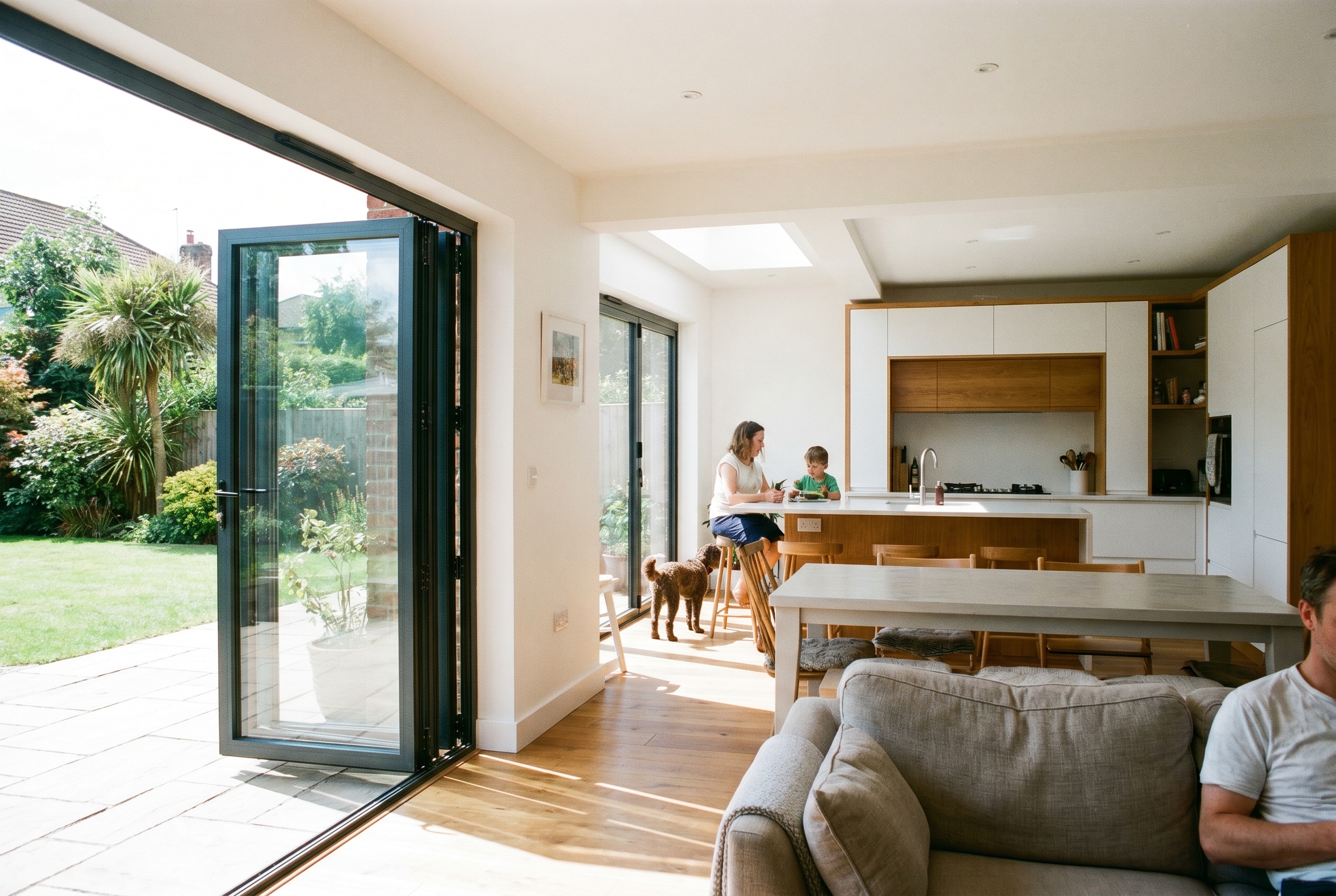
A Realistic House Extension Timeline Example
Let’s say you want a 5m rear single-storey kitchen extension. You contact Arkiplan in January. Here’s how the timeline might look:
- January: Survey and design. Drawings completed within 3 weeks.
- Early February: Planning application submitted (if needed). Building regs drawings started in parallel.
- April: Planning granted. Building regs approved. Start contacting builders.
- May: Builder quotes received and compared. Builder chosen. Start date agreed: late June.
- Late June: Build starts.
- October/November: Build complete. Snag list signed off. Extension handed over.
That’s roughly 9–10 months from first contact to moving in. Not as quick as you might hope, but manageable when you understand what’s happening at each stage.
Tips to Speed Up Your Extension Timeline
- Start the design process as soon as you’ve decided to extend. Don’t wait until you’ve sorted your finances. Drawings take time — get them moving.
- Use a designer who can submit planning applications. Arkiplan handles everything in-house — design, planning, building regs, structural calcs. No waiting around for separate consultants.
- Get builder quotes while you wait for planning. You can approach builders before planning is granted — just make it clear it’s conditional.
- Make decisions early. Choose your windows, doors, tiles, and finishes before the builder starts. Every week of indecision on a material is a week tacked onto the end.
- Use a build cost report. Know your budget before you break ground. Nothing halts a project faster than running out of money mid-build.
Ready to Get Started?
If you’re planning an extension, the best thing you can do right now is get your drawings sorted. Everything else — planning, building regs, builders — follows from that. The sooner the drawings are done, the sooner the clock starts ticking in your favour.
At Arkiplan, we turn around extension drawings in 2–4 weeks, handle all the applications, and connect you with trusted builders. Fixed pricing, no surprises. See how our house extension service works and get your project moving today.