Planning guide · England & Wales
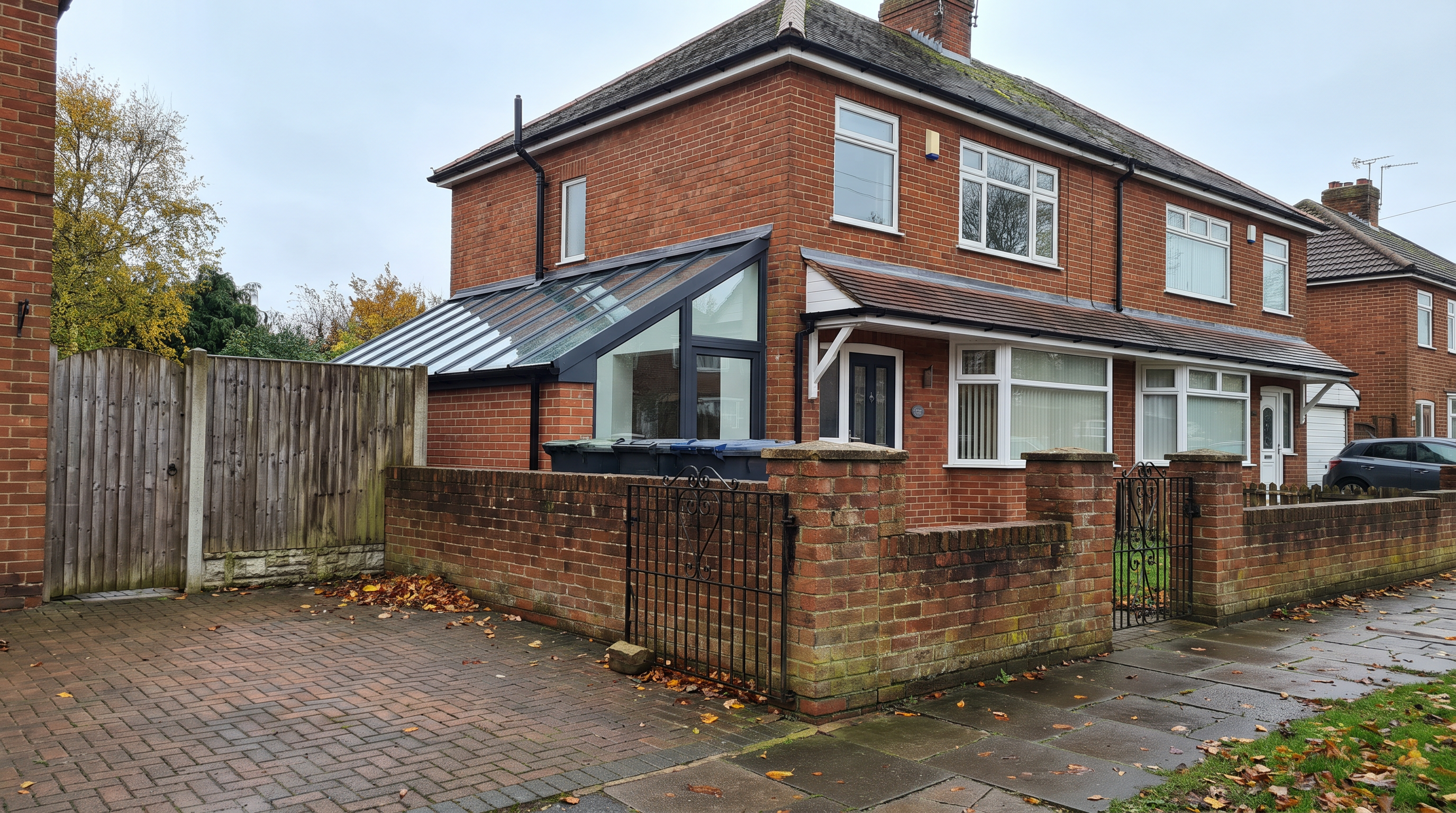
Single-storey side extensions can often be built under permitted development — but the rules are tighter than for rear extensions, especially on width and on the front of your home. Here is how it works in England and Wales, and how we get yours drawn and approved at a fixed price.
Often, no — a single-storey side extension can be permitted development if it stays within the limits below. But side extensions lose those rights more easily than rear ones: anything wider than half the original house, more than one storey, or forward of the front wall will need a full application.
You will need full planning permission if the extension is two-storey, sits forward of the principal (front) elevation, is wider than half the original house, or if your home is on designated land — a conservation area, national park or AONB — where permitted development for side extensions is usually withdrawn. Flats and maisonettes are excluded too.
Side extensions are treated more strictly than rear extensions. Here is how single-storey side extensions are dealt with in each nation.
We are an online architectural design service — the practical alternative to a traditional high-street architect. Our qualified design team draws your plans, works out whether you are permitted development or need a full application, and deals with the council on your behalf.
Not always. A single-storey side extension can be permitted development if it is no more than half the width of the original house, no taller than 4 metres, not forward of the front wall, and not on designated land. Two-storey side extensions, and anything outside those limits, need full planning permission.
Under permitted development, a side extension must be no more than half the width of the original house, and single-storey, with a maximum height of 4 metres. Anything wider or taller needs a full planning application.
No. Two-storey side extensions are not covered by permitted development and require a full planning application in both England and Wales.
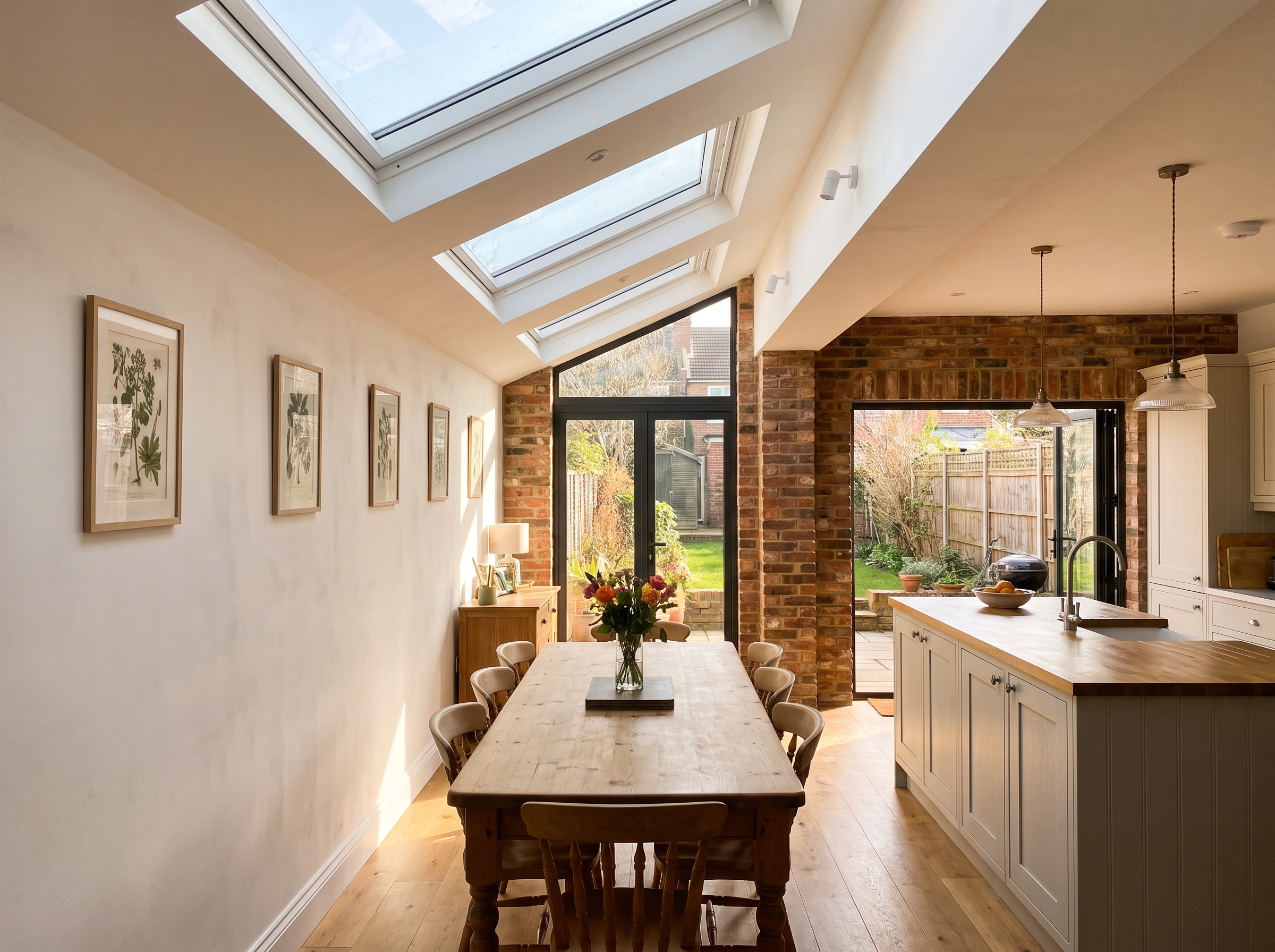
It is a single-storey extension that fills the narrow gap to the side of the original rear addition, common on Victorian and Edwardian terraces. It is often permitted development on its own, but is usually combined with a rear extension, so we assess the whole footprint.
Yes. Planning rules decide whether you can build; building regulations govern how it is built. Almost every side extension needs building regulations approval regardless of whether it needed planning permission.
Permitted development rights for side extensions are usually removed on designated land such as conservation areas, national parks and AONBs, so a full planning application is normally required. We confirm the position for your specific address.
No call required, no card required — just a tight, fixed-price range tailored to your project, with the planning route confirmed for your address.
This guide is general information, not planning advice, and permitted development rules change and depend on your specific property and local authority. We confirm the current position for your address as part of every project.