House extension drawings
Professional planning & building regulations drawings for single-storey, double-storey, side-return and wrap-around extensions across England and Wales. Your fixed price is locked in writing before any work starts. No surprises, no hourly billing, no architect-speak.
Every type of extension
Different houses, different rules. We've handled every common configuration of UK home extension — and a fair few uncommon ones too. Pick what's closest to your project; we'll refine the rest on your free design call.
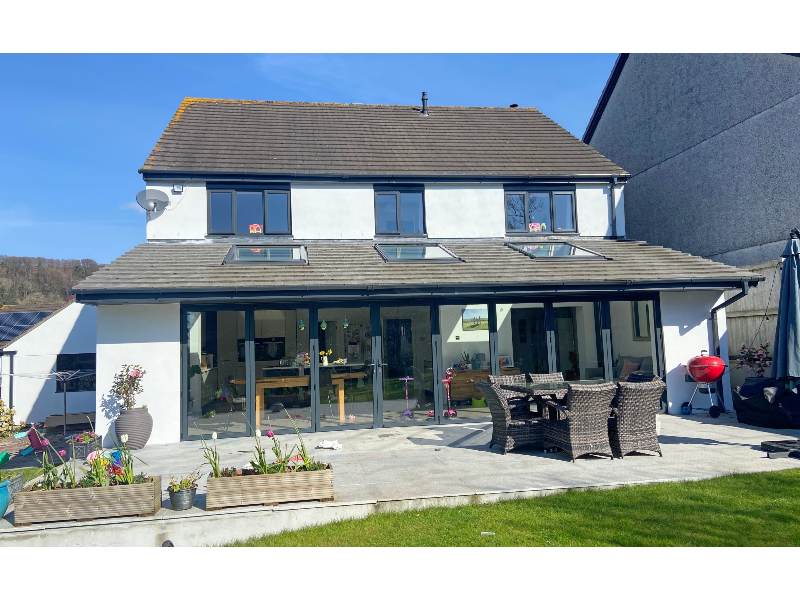
Kitchen-diner, family room, garden room. Often permitted-development if your house qualifies, otherwise a straightforward householder application. The most common Arkiplan project — we've drawn over 600.
Adds bedroom and bathroom space upstairs while extending the ground floor. Needs full planning permission in almost all cases. We handle the consultation with neighbours, daylight studies, and the rest.
Squeezes valuable extra metres out of the dead space alongside Victorian and Edwardian terraces. Often combined with a rear extension to create a wrap-around L-shape. Commonly permitted-development.
Combines a rear and side-return extension into one continuous L-shape. The biggest single uplift in liveable space you can get without going up a storey. Usually needs planning permission.
Adding to your home at ground level only — kitchens, snugs, utility rooms. Read our dedicated ground floor extension plans page.
Front porches, glazed entrance halls, covered walkways. Often permitted-development if under 3m² external footprint and below specific height limits. Quick, cheap, lovely upgrade.
What you get
Every Arkiplan extension package includes the drawings, calculations and applications your local authority will demand — submitted on your behalf, by us. The fixed price is written into your quote.
See all packages →Planning permission & permitted development
For most UK homeowners, the answer is: maybe not. Many house extensions fall under permitted development — a set of national rules that lets you extend your home without applying for full planning permission. But the rules are precise, and getting them wrong is expensive.
If your project meets all the permitted development criteria — including specific limits on depth, height, eaves, materials, footprint and proximity to boundaries — you can apply for a Lawful Development Certificate instead. It's faster, cheaper, and confirms in writing that your extension is legal.
If you're in a conservation area, area of outstanding natural beauty, your home is listed, or your extension exceeds permitted-development limits, you'll need a full householder planning application. We handle these every day — including the awkward ones with neighbour objections, daylight/sunlight assessments, and design-and-access statements.
Every Arkiplan extension project starts with a feasibility check. Before any drawings are produced, we'll tell you exactly which route applies to your home — saving you the cost and time of submitting the wrong application. Our 94% planning approval rate isn't luck; it's because we don't submit applications that aren't going to succeed.
If you'd like to read more, our blog has a comprehensive guide: Do I Need Planning Permission for an Extension? (Complete UK Guide).
No call required. No card required. Just a tight price range tailored to your project's complexity.